He Sold His Startup for $9.5B Then Started Over
Inside the Mind of Jia Kang, the System Builder Who Refuses to Stop Learning
Jia Kang is the co-founder of Ele.me, the food-delivery platform acquired by Alibaba for US$9.5 billion, and the founder of Belink, a fast-growing social infrastructure company serving China’s aging population. This is a story about the system behind the entrepreneur, and the mission behind the systems he builds.
Entrepreneurship as an Open-World System
When Jia Kang speaks, he does not try to impress you. He doesn’t dramatize his journey, nor does he emphasize the odds he overcame. Instead, he discusses entrepreneurship with quiet, almost offhand clarity, as if it were self-evident.
“创业对我来说……像一个开放世界游戏。”
Entrepreneurship, he says, is an open-world game.
He doesn’t smile when he says it. He doesn’t offer a metaphor or a follow-up explanation. He simply releases the sentence into the room, calm and unadorned, the way someone might state the weather.
Watching him, I realize the meaning is not in the words themselves, but in the ease with which he says them. To him, entrepreneurship is not a story of destiny or hardship. It is a system, a world of rules, choices, frictions, and emergent order. A place where learning happens through interaction, not introspection. Where outcomes materialize not from conviction, but from calibration.
Most founders explain themselves through dramatic turning points. He does not.
Not because those moments never existed, but his identity wasn’t shaped in moments; it was shaped through iterations.
Talking to him feels like tracing the logic of an internal operating system. This structure has been refining itself quietly for decades, absorbing noise, adjusting parameters, discarding errors, and moving forward long before most people have decided what to do.
This is the architecture behind everything he has built: First, the invisible logistics engine of Ele.me, now the trust networks of Belink, and always, a way of navigating the world that begins not with emotion or narrative, but with structure.
Where Others See Failure, He Sees Parameters
To understand Jia Kang, you have to let go of the usual instinct to search for defining moments. He does not organize his life that way.
When you ask him about failure, he doesn’t recount dramatic collapses or heroic recoveries. He shrugs slightly and says the setbacks were “just many small things,” none of them worth isolating.
At first, this sounds evasive, a founder reluctant to dwell on the past. But the longer you listen, the more you realize it reveals something essential.
For him, mistakes do not become stories. They become adjustments. They dissolve quickly into the next action, the next iteration, the next configuration of the system.
Failure, as most people understand it, with its emotional weight and narrative arc, does not take root in him.
What stays instead is calibration.
He is constantly absorbing friction, updating his internal parameters, refining his model of the world. His learning speed comes not from inspiration or introspection, but from the sheer velocity with which he metabolizes experience.
Yet this system-like efficiency does not mean he is cold.
His empathy appears not in language but in behavior, almost as a form of responsibility.
When a classmate at Xi’an Jiaotong University needed life-saving treatment, his peers donated what they could, but he could see the system was insufficient. Students, no matter how willing, lacked the means.
So he went outside the system. He approached companies with ties to the university, told them the story, and secured enough support to save his classmate’s life.
He recounts this quietly, without self-congratulation, but the implications are unmistakable.
He notices where people fall through the cracks and instinctively looks for structural solutions. His empathy is not loud. It moves like water, purposeful, unobtrusive, always seeking the path that changes the outcome.
This habit of acting rather than theorizing, of solving rather than storytelling, is not something he adopted later in life. It is the core of who he is. And it is the lens through which every chapter of his journey must be understood.
Selling Newspapers, Drifting Through School, Learning the World
He grew up in Suide, a small city in northern Shaanxi. His father taught Chinese literature, a profession built on nuance, rhythm, and interpretation. The house was full of books and language, the subtle machinery of words. But the school system itself never captivated him, not in the way it was supposed to.
Academically, he was capable. When he chose to focus, he could perform well within the structure of exams and classrooms. But performance alone did not hold his attention for long. After a period of doing well in school, he gradually disengaged, not in rebellion, but in restlessness. He stopped putting effort into studying and drifted outward, toward the world beyond textbooks.
For nearly two years, he sold newspapers on the street and worked in small shops in his hometown. He watched how people behaved when money was tight, when time mattered, when the weather changed the rhythm of a day. He did not frame this period as resistance to authority or escape from responsibility. To him, it was movement, a way of learning that felt more real.
Those years taught him more about incentives, timing, and human behavior than any classroom could. He saw, almost accidentally, how micro-decisions ripple, how trust builds through repetition, how small operations depend on rhythm.
These weren’t lessons; they were impressions, left on him the way muscle memory settles into the body.
Eventually, family pressure brought him back into the rhythm of school. He completed his studies and moved forward academically, but something fundamental had already shifted.
Formal achievement no longer felt like proof of progress. The structure worked, but it didn’t engage him. The clearer the rules became, the less alive he felt inside them.
What unsettled him was not failure, but predictability. Closed systems, neat and rule-bound, offered certainty but no discovery. They moved forward, but only along pre-drawn paths.
He realized he needed environments with friction, complexity, and open-endedness. Worlds where outcomes weren’t predetermined, where learning emerged through interaction rather than instruction.
It was around this time that gaming took hold in his life. Not as an escape, but as training. Games offered what school did not: maps that could be explored, strategies that could be tested, systems that revealed themselves only through trial and error. They rewarded curiosity over compliance. They matched the rhythm of his mind.
After graduating from Xi’an Jiaotong University, he chose to attend Shanghai Jiao Tong University for graduate school, not because of any specific academic ambition, but because Shanghai offered a wider horizon: more density, more movement, more real-world friction.
Life there settled into a familiar pattern. Late nights gaming with friends. Hunger arrives at predictable hours. Options that were limited. Delivery that was slow, unreliable, or sometimes simply unavailable.
And one evening in the dorms, surrounded by the noise of roommates and the glow of a computer screen, he and a friend wondered aloud whether they could attempt something of their own.
The spark for Ele.me wasn’t a grand vision; it was the quiet accumulation of lived inefficiencies, all pointing to a structural gap waiting to be filled.
Ele.me was founded in 2008 by two Shanghai Jiao Tong University graduate students, Xuhao Zhang and Jia Kang.
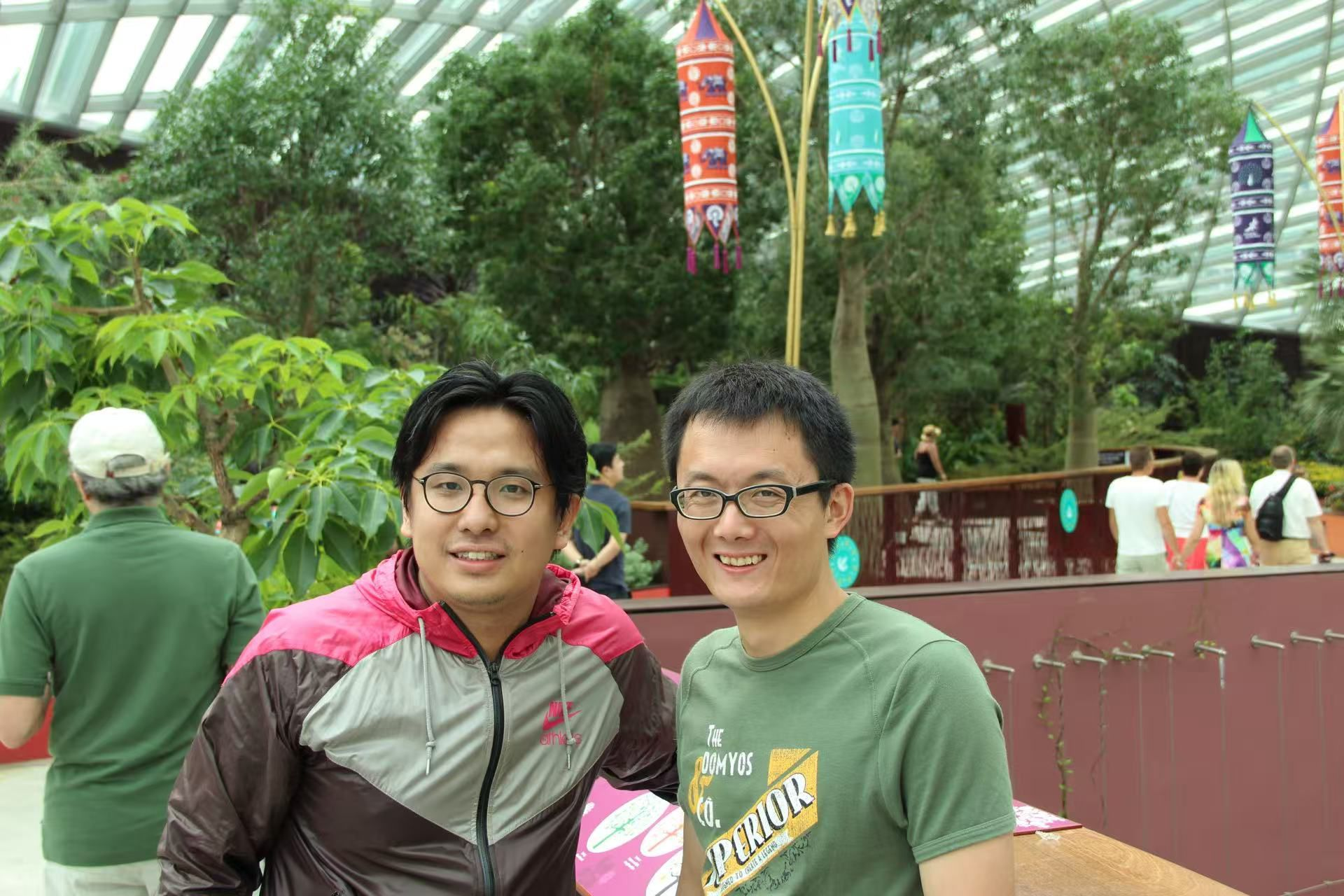
Within days, they were researching. Within weeks, they were building. Not because they had a plan, but because they had momentum.
That momentum has carried him ever since.
The Quiet Architect Behind China’s Instant-Commerce Backbone
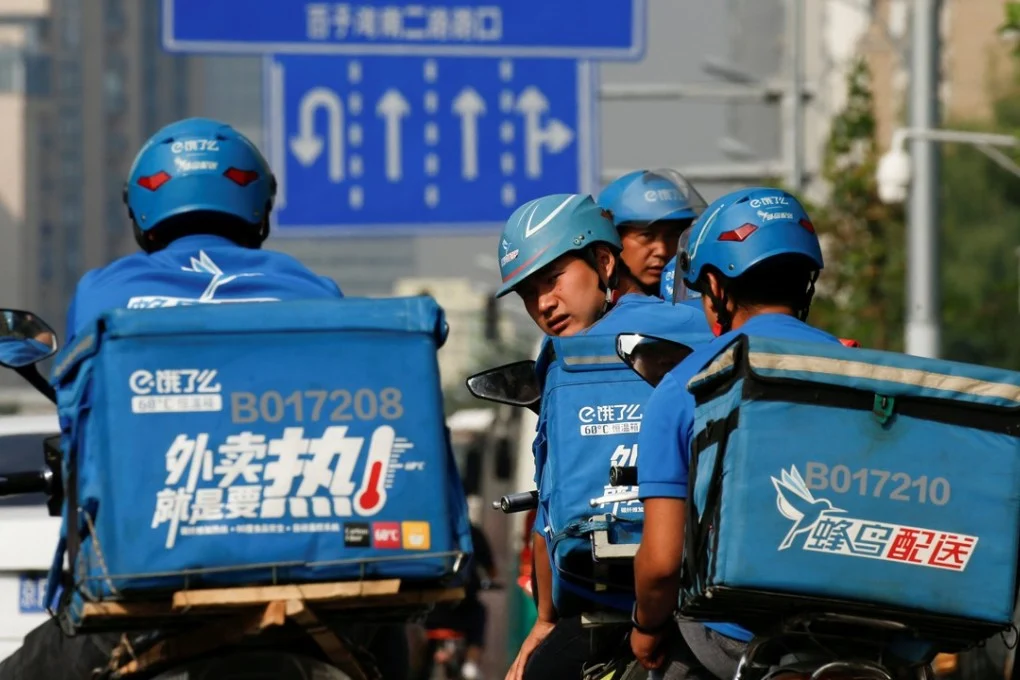
Ele.me was born at a time when food delivery in China was not an industry but an improvised service. Orders moved through cities the way rumors do, unevenly, unreliably, without structure. Restaurants answered phones manually. Riders came and went according to their own rhythms. There was no logic, no backbone, no system to scale.
Most founders at the time treated the business as a marketing race: subsidies, promotions, and user acquisition.
He went in a different direction. He looked at the mess and saw a puzzle that needed a shape.
Looking back, he says this lightly, without decoration:
“那时候物流体系基本是我们团队搭起来的。”
And though the words are simple, they mark the one achievement he speaks of with unmistakable conviction.
In those early years, nobody talked about AI. Nobody imagined predictive dispatch or real-time retail. These concepts did not exist, not in the market, not in the vocabulary, not even in investors’ imagination.
But he was already building the earliest version of it.
The logistics network they created, later named Fengniao, was not a single breakthrough. It was the construction of an entirely new operating logic.
Delivery was no longer treated as a collection of isolated tasks. It became a continuous, city-wide coordination problem. Orders, riders, merchants, distance, and time were modeled together, allowing the system to make allocation decisions dynamically instead of reactively. It learned from how riders actually behaved, adjusted incentives to stabilize supply during peak demand, and optimized routes at a scale no human dispatcher could manage.
What seemed like operational decisions at the time would later be recognized as the prototype for the world’s instant-commerce systems.
Years later, he describes it almost offhand:
“其实那时候,就是即时零售的雏形。那时候的AI和现在不同,但我们做的东西,本质上就是后来整个行业的基础。”
It is the closest he comes to pride. Not loud or boastful, but the quiet certainty of someone who knows he built something foundational long before the world had words to describe it.
Inside Ele.me, everyone understood this. The logistics system wasn’t an internal project; it was the company’s spine.
Without it, no amount of marketing could have kept them alive. With it, they could stand against giants.
And giants came.
Meituan. Baidu. Alibaba.
Each with deeper pockets, larger ecosystems, and more organizational muscle.
The subsidy wars became something like a siege.
By then, the cost of customer acquisition had become staggering.
Precise figures were never publicly disclosed, but industry estimates later suggested that between 2014 and 2018, Meituan, Ele.me, and other contenders collectively spent US$10–15 billion on direct and indirect subsidies. The money went everywhere, deeply discounted meals, rider bonuses, merchant incentives, all in service of speed, convenience, and market share.
It created a loss-leading ecosystem that trained an entire nation to order food on demand.
And it left very little margin for error.
He was at Beijing Capital Airport when the call came in. The message was blunt: Ele.me could no longer sustain its subsidy levels. They had to come down immediately.
At that point in the war, subsidies were not a growth tactic; they were oxygen. Discounts were holding entire cities together. Pulling them back meant churn, merchant backlash, and the very real possibility of losing ground permanently to better-funded rivals.
Most founders would panic. He did not.
He recalculated. Constraints had changed; the plan had to change. He rewrote the war map that same day, city priorities, operational cadence, and risk distribution.
To him, fear was noise. The system was the signal.
But the pressure was constant, unrelenting. He visited frontline teams, drove between cities late into the night, and recalibrated processes in real time.
At one point, exhaustion caught up with him. He mentions it briefly, too briefly, as if reporting on someone else. He had been hospitalized for overwork, a forced reboot of a system pushed to its limit.
He doesn’t elaborate. He doesn’t dramatize it. He moves on quickly because, in his mind, it wasn’t a story. It was a condition.
Yet even under this strain, Ele.me expanded city by city, region by region, more than 200 cities, each with its own operating logic, all becoming part of a vast, breathing organism.
The logistics backbone he built allowed the company not just to grow but also to maintain a structure with enough coherence to withstand giants.
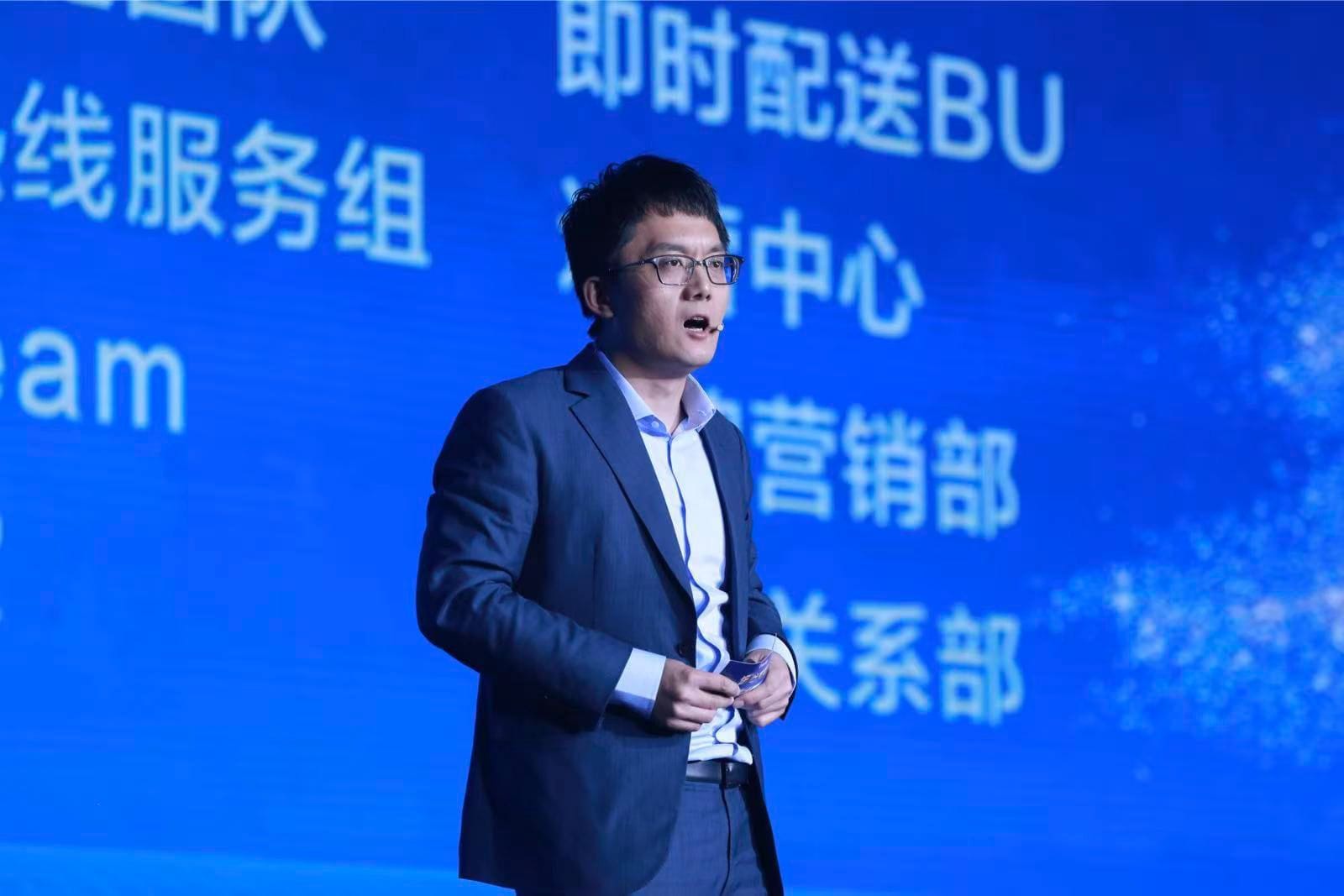
When Alibaba acquired Ele.me in 2018, it marked the end of one of the most brutal commercial battles of the decade.
The deal, a cash acquisition of roughly US$9.5 billion, the largest all-cash tech acquisition in China at the time, became a defining moment not just for the company but for the entire internet industry.
Many assumed that after such a historic exit, he would finally step away.
But he didn’t.
Instead, he did something almost paradoxical. Having never worked for anyone else in his entire life, not before Ele.me, not during it, he found himself drawn to a new kind of curiosity.
What does a giant look like from the inside? How does an organization with tens of thousands of people stay coherent? How do systems behave when they are no longer being invented but inherited?
So he stayed.
Not as a founder guarding legacy, but as an observer, a builder, a student of large-scale structure.
Alibaba became a different kind of open world, defined not by chaos but by complexity, not by speed but by depth.
It offered something he had never studied before: how leadership becomes management, how management becomes culture, and how culture becomes a system powerful enough to organize an entire nation’s daily life.
And it was inside this quieter, more structured environment that the seeds of his next chapter began to form.
After the War: Returning to Ordinary Time
After Ele.me was acquired, he didn’t leave immediately. He stayed inside Alibaba for almost two years, working on local services infrastructure and logistics integration.
It was the first time in his life that he was part of a system he hadn’t built.
When he finally stepped away, he didn’t rush into the next thing. He rested, truly rested, for the first time in over a decade.
About half a year of ordinary life. Drinking with friends. Gaming late into the night. Spending unhurried time with his parents, allowing the world to move at its own pace without trying to push it.
And it was in this quiet return to everyday rhythm that he began noticing something he had never seen before.
His parents, newly retired, had time, curiosity, and means, but no reliable structure for how to spend this phase of their lives.
The more he accompanied them, the clearer the gap became. Retirement was not a logistics problem, nor a consumption problem.
It was a trust problem. A companionship problem. A social architecture problem.
And the seed of Belink took shape not in a moment of ambition, but in a moment of rest.
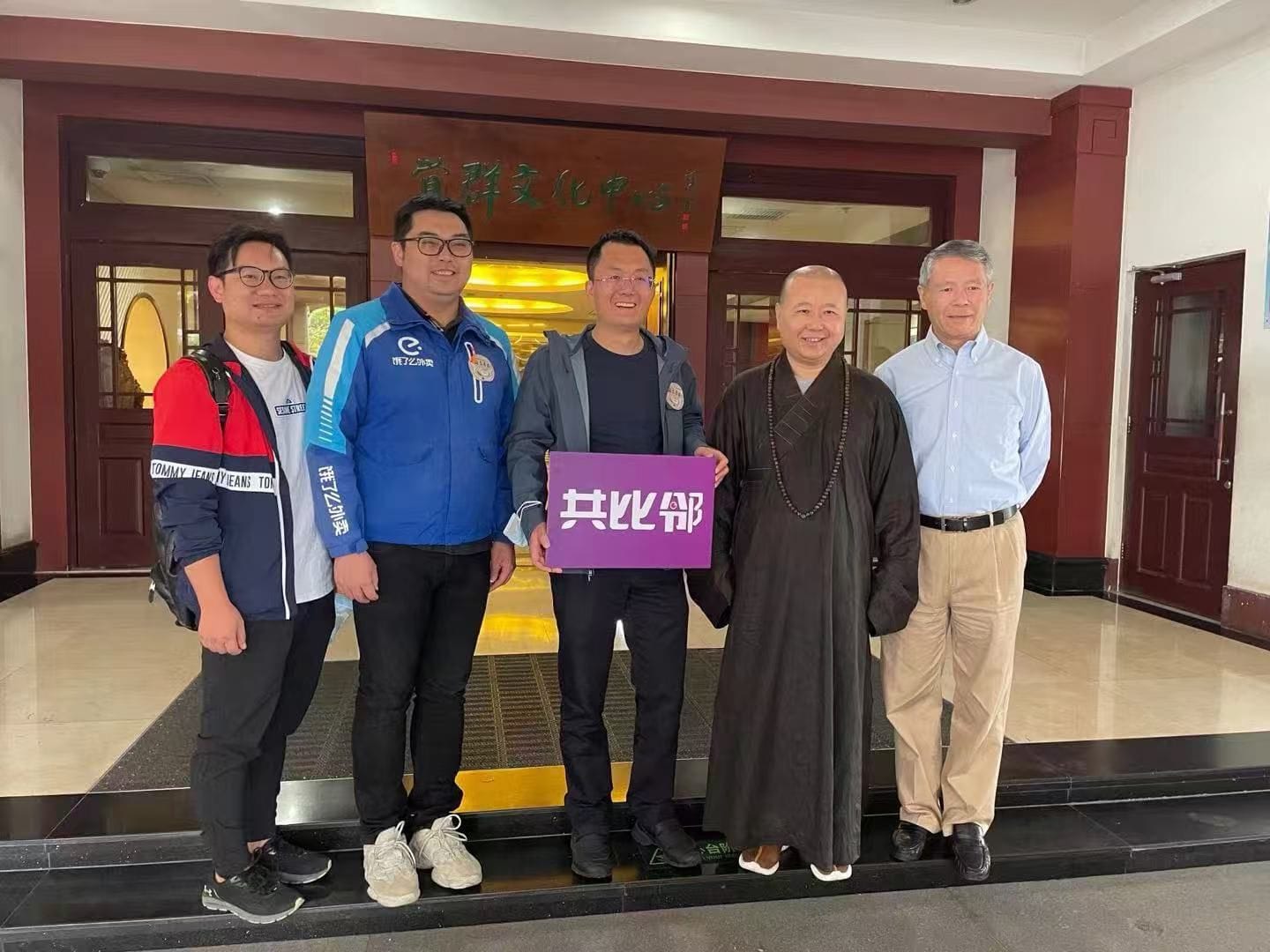
Belink: Trust Architecture in an Aging World
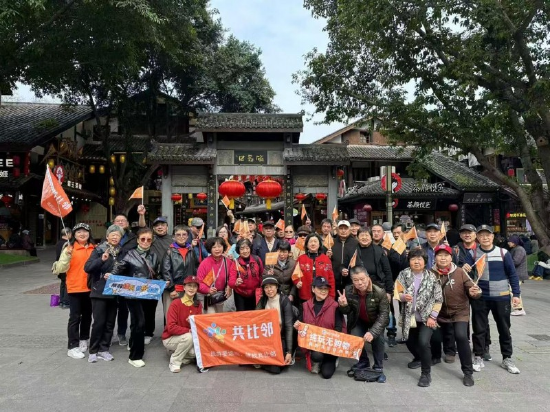
Belink did not begin with a business plan. It started with observation, the same kind of noticing that had once led him to food delivery.
What retirees lacked was not itineraries. It was trust, companionship, and relationships.
And beneath that emotional truth was a second, quieter one: aging alone accelerates both physical and psychological decline.
If trust was the missing infrastructure, Belink needed a system that created repeated, emotionally safe interactions, something the market offered only in fragments.
So he started in Shanghai, just as he had once done with Ele.me:
Prototype in one city. Refine the model. Then scale.
Travel became the doorway, not because it defined the business, but because it created the quickest route to companionship. Shared journeys built friendships; friendships built trust. And trust built community, the real currency of later life.
Once trust existed, a broader architecture emerged.
Older adults today are deeply digital. They browse social media, join livestreams, and shop online. Their attention is far less expensive to acquire than that of younger users, a structural advantage Belink understood early.
From there, the system took shape:
High-frequency, low-ticket livestream commerce paired with low-frequency, high-value experiences like travel, learning, and health programs.
To knit these behaviors together, Belink opened physical community stores across Shanghai, more than 200 today, each serving as a pickup point and a social anchor.
A place where customers feel known. A place where friendships deepen. A place where the digital and physical worlds finally meet.
In these stores, a simple errand can become a conversation. A conversation can become a gathering. A gathering can become a journey.
All of this is happening against a larger backdrop: China is aging faster than any major nation in history. Within a generation, older adults will become one of the world’s largest consumer and social groups, yet the country’s infrastructure for aging remains thin.
Belink is not a tour operator. It is not an e-commerce channel. It is not a marketplace.
It is a social operating system for the last third of life.
Where Ele.me engineered the speed of urban living, Belink engineers the architecture of aging.
One delivered convenience. The other delivers connection.
Both required building the system beneath the surface.
Mission as System
If there is one principle that runs through his work, it is not speed, nor scale, nor even execution; it is mission.
Not the motivational kind, but mission as the operating logic of a company, the force that aligns thousands of people when the system becomes too complex for any one person to steer.
He learned this at Ele.me. Execution could win battles, but mission won coherence. It kept tens of thousands of couriers, merchants, and city teams moving in the same direction even under relentless uncertainty.
And now, in Belink, mission becomes even more essential because the problems he is solving are not logistical but human: loneliness, trust, and the psychological and physical risks of aging without community.
He is not drawn to companionship because it is heart-warming; he is drawn to it because it is structural.
In aging, loneliness is not an emotion; it is a risk factor. Connection is not a hobby; it is a form of health insurance.
What he is building is not sentiment, but infrastructure, the social scaffolding that keeps people psychologically and physically intact in the final decades of life.
Mission, to him, is not a slogan. It is a direction under uncertainty. It is prioritization when everything is urgent. It is cohesion when scale outruns culture.
This is why his companies grow beyond their categories.
Ele.me became not just a delivery app, but the real-time logistics backbone of a generation.
Belink is becoming not just a senior community platform, but a new operating system for how older adults stay connected, supported, and healthy.
People often ask what defines a founder. Vision? Intelligence? Resilience?
For him, it is something quieter: the commitment to build systems around missions that matter and to keep updating them long after others would stop.
His first mission was convenience. His second is the protection of connection and health, two forces that will shape the next 30 years of China’s demographic transformation.
And in a world where millions will soon age alone, a founder who builds systems that reconnect people may be precisely the kind of builder the next decade needs.